· Judiciary Insight · Campaign · 2 min read
JD Vance Revisits the Wall Street Journal's Open-Borders Editorial
Full context
Vice President JD Vance reached back more than four decades to criticize the economic philosophy he believes harmed American workers.
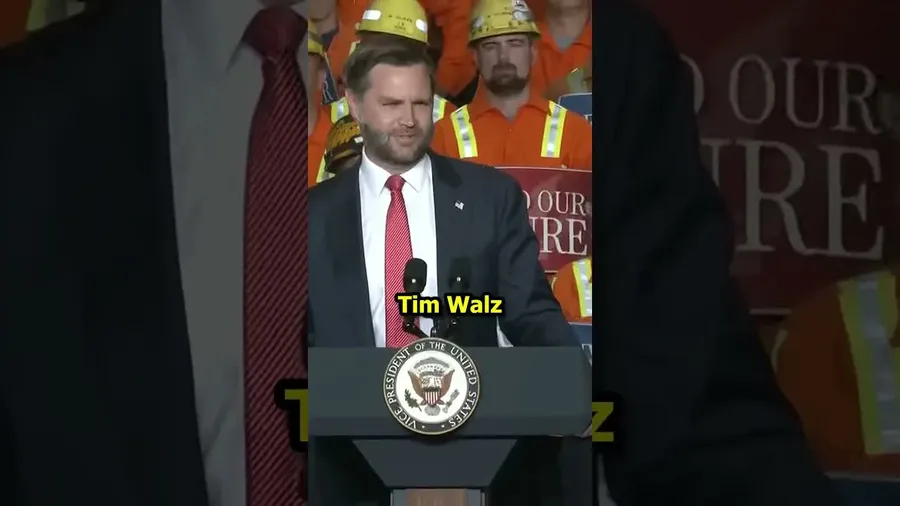
Speaking at Cleveland-Cliffs Middletown Works in Ohio, Vance quoted a 1984 Wall Street Journal editorial that proposed a five-word constitutional amendment: “There shall be open borders.” He argued that the line was neither a joke nor a passing provocation, but a clear statement of what powerful business interests wanted to accomplish.
The quotation is genuine. Understanding how Vance uses it requires separating the original editorial’s argument from his interpretation of its consequences.
What the Journal argued
The July 3, 1984 editorial, titled “In Praise of Huddled Masses,” opposed a pending immigration compromise and defended immigration as a source of American strength. It acknowledged that an open-borders amendment might be overly ambitious, but presented the idea as an expression of optimism, individual freedom, and confidence in immigrants’ contributions.
The Journal’s editorial page continued to favor freer movement across national borders in later years. Former editorial page editor Robert Bartley connected free trade in goods and movement of capital with the free movement of labor.
Vance accurately identifies a real position associated with the Journal’s opinion pages. That position belonged to the editorial board, however, not the newspaper’s reporters or its news coverage. The distinction matters when criticizing an institution as broad as the Wall Street Journal.
Vance’s economic argument
Vance treats the quotation as evidence of an elite consensus that placed efficiency and corporate profit ahead of national communities. In his account, companies gained access to cheaper labor through immigration while moving production and capital abroad, leaving industrial towns to absorb job losses and social disruption.
That framing combines several different forces. Immigration can expand the labor supply, while trade agreements, offshoring, automation, currency values, and domestic investment decisions can separately affect wages and manufacturing employment. A single editorial does not establish how much each factor contributed to the decline of a particular town or industry.
Still, the clip captures an important change inside Republican politics. The older free-market view treated the movement of goods, capital, and workers as related forms of economic freedom. Vance’s economic nationalism argues that government should judge each policy by whether it strengthens American workers, domestic production, and national cohesion.
The disagreement is therefore larger than one provocative sentence from 1984. It is a dispute over what markets are for, who should benefit from them, and when national borders should limit economic freedom.