· Judiciary Insight · Campaign · 2 min read
Trump Mixes Women’s Sports Policy With Jokes About Gay Voters at Graham Rally
Full context
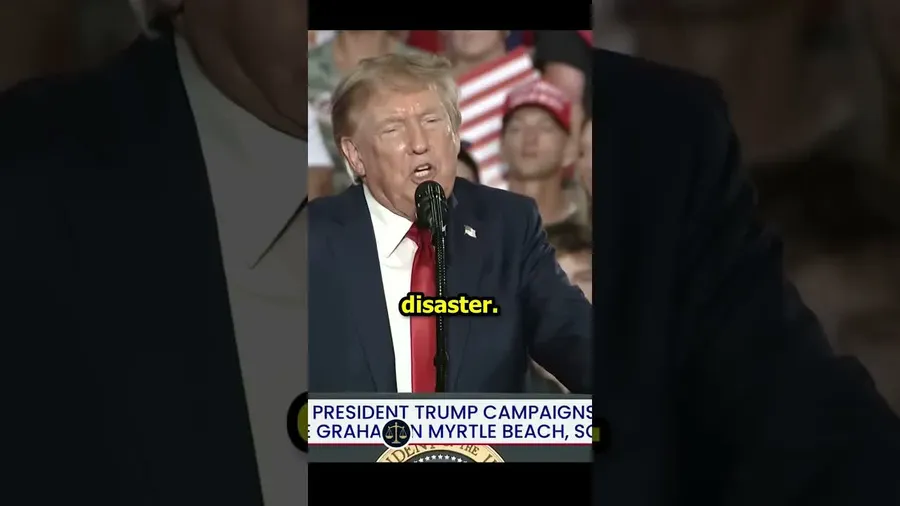
President Donald Trump mixed a substantive culture-war issue with familiar rally humor while campaigning for Sen. Darline Graham in Myrtle Beach, South Carolina.
Trump discussed transgender participation in women’s sports before turning to his impressions and dancing, joking about first lady Melania Trump’s reaction. He then talked about his support among gay voters and referred to a song associated with his rally performances as the “gay national anthem.”
The sequence moved quickly from policy to personality. That is a recurring feature of Trump’s campaign style: a formal political argument becomes a story or joke designed to keep the audience engaged and generate a memorable clip.
The policy behind the rally line
Trump’s comments about women’s sports refer to an established administration position, not merely a campaign promise. His February 2025 executive order directed federal agencies to treat women’s athletic categories as sex-based when enforcing Title IX and to prioritize action against federally funded educational programs that allow transgender women and girls to compete in female categories.
The order also called on the administration to press private and international sports organizations toward similar rules. It does not, by itself, write every eligibility standard for every private league; implementation still depends on federal enforcement, governing-body policies, and the legal questions surrounding particular institutions.
Supporters frame the policy as protecting fairness, safety, and athletic opportunities for women and girls. Opponents argue that categorical exclusions discriminate against transgender athletes. The rally clip does not engage that disagreement in detail, instead using the issue as a marker of Trump’s broader cultural agenda.
Humor is not the same as outreach
Trump’s remarks about gay voters add a different political note, but the clip offers no evidence about the size or priorities of that voting bloc. LGBTQ voters are not politically uniform, and a joke about a popular song should not be treated as a policy appeal on its own.
The immediate campaign objective was clearer. Trump appeared at the August 21 rally to help Graham ahead of South Carolina’s Republican Senate runoff, placing national culture-war themes inside a state race where his endorsement was itself part of the contest.
Read the executive order setting the administration’s policy on women’s sports.