· Judiciary Insight · Campaign · 3 min read
Stephanie Chang Says Oil and Gas Interests Put More Than $10 Million Behind Mike Rogers
Full context
Michigan State Sen. Stephanie Chang accused Republican U.S. Senate nominee Mike Rogers of favoring oil and gas interests while Michigan families face high fuel costs.
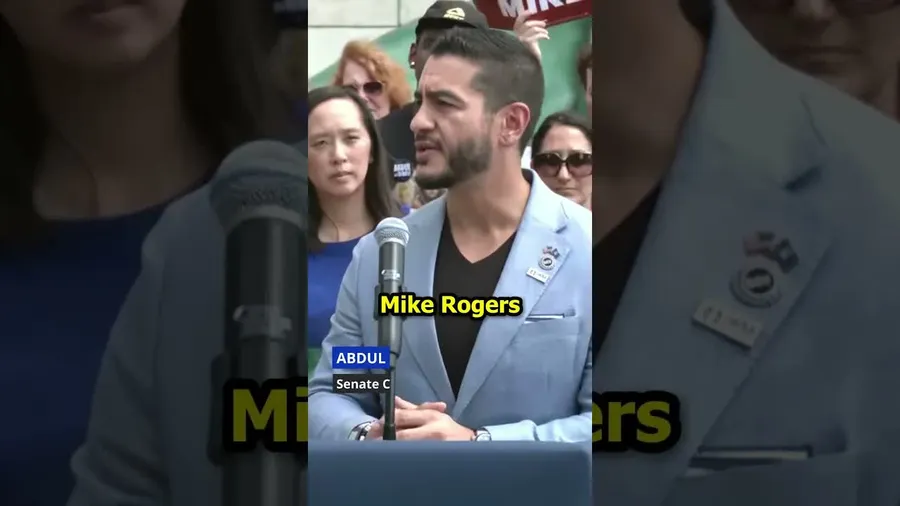
Chang made the argument at an August 19 press conference organized by the Michigan Democratic Party and joined by Democratic Senate nominee Abdul El-Sayed. She connected three issues: President Donald Trump’s war in Iran, Rogers’s support for the conflict, and campaign money associated with the oil and gas industry.
“Rogers’ campaigns and PACs have taken more than $10 million dollars from oil and gas interests,” Chang said, according to a transcript published by El-Sayed’s campaign. She argued that his voting record protected donor profits over consumers’ finances.
What the $10 million claim includes
The wording matters. Chang referred to multiple Rogers campaigns and PACs, not solely direct contributions to his current candidate committee. The larger total can therefore combine donations made during different election cycles with money given to political committees that support Rogers.
Those categories are not interchangeable. A contribution to a candidate committee is controlled by the campaign and subject to candidate contribution limits. An independent super PAC may raise and spend much larger sums but is legally prohibited from coordinating its expenditures with the candidate.
Federal Election Commission records provide the underlying receipts and committee reports, but the agency does not automatically classify every donor by industry in the way political researchers do. Evaluating Chang’s total requires checking which committees, years, donors, employers, and corporate affiliations were included. The clip does not explain that methodology.
This does not erase the underlying relationship. Rogers has received direct support from energy-sector donors, while oil executives have also financed outside groups supporting him. It does mean readers should not interpret the full $10 million as a single check to his 2026 campaign.
El-Sayed’s corporate PAC distinction
Chang contrasted Rogers with El-Sayed, who says he has never accepted a corporate PAC contribution. Independent reporting during the Democratic primary supported that narrower claim.
Refusing corporate PAC checks does not mean a candidate receives no help from PACs or wealthy political donors. Independent groups also spent money supporting El-Sayed during the primary. The meaningful distinction is control: his campaign rejected direct corporate PAC contributions, while outside organizations could still spend without campaign coordination.
Chang also highlighted El-Sayed’s opposition to the Iran war. His campaign has argued that money spent on overseas conflicts should instead address needs in Michigan and has linked the conflict to higher gasoline prices.
Geopolitical conflict can affect crude oil markets and retail fuel costs, but campaign contributions alone do not prove why a politician adopted a position. Gasoline prices also reflect global supply, refining capacity, distribution, seasonal demand, and taxes. Chang’s remarks present a political case about incentives and alignment, not direct evidence of a transaction between a donor and a vote.
Read the campaign’s transcript of Chang’s remarks.
Review Mike Rogers’s current campaign filings through the Federal Election Commission.